Sharing Rambling, Resources and Recipes for Learning in Life

Sharing Rambling, Resources and Recipes for Learning in Life

Tag: Ramblings

RamblingsResources

Closed Syllables

You know there’s a commercial I’ve seen many times and one of the tag lines is “….a little pill with a big story to tell…”  Closed syllables are rather like that.  They are almost the smallest words we have in our language.  Open syllables can actually be shorter, using a single letter.  But, closed syllables, which can be as short as two letters form over 50% of the words in our language.  If these syllables make up over half of our language, they are worth knowing and knowing well!

Let’s start with what a syllable is in general.  Simply put, and the definition I teach all of my students in my phonics catechism, “A syllable is a word or a part of a word with one sounded vowel.”  I teach that there are six main kinds of syllables.  Those are closed syllables, open syllables, silent e syllables, vowel team syllables, r-controlled syllables and final stable syllables.  Closed syllables are the first kind of syllable I teach students to read because they are the most common and they use short vowel sounds which are the common sound, the sound a letter makes most often, I teach for vowels.

So, then what is a closed syllable?  The definition I teach for closed syllables is “A closed syllable has one vowel, ends in a consonant and the vowel is short.”  This includes simple words like at and it.  So you can see that students can also start reading these syllables as soon as they are fluent in two letter sounds.  Starting students reading quickly AS they are learning sounds helps them to stay engaged in the learning process as they are actually practicing the skill that is the purpose of learning letter names and sounds in the first place.  Children love the feelings of pride they experience as they are able to piece together these bits of knowledge to make words to read on their own!  This feeling of pride and wonder of discovery helps to keep them engaged and moving forward in their acquisition of fluency with letter names and sounds.  Learning closed syllables and the rule(s) that govern them, as well as learning open syllables and the other types later on, keeps readers from having to try out and guess at which vowel sound to use when sounding out a word.  They learn to recognize that if a word ends in a consonant and has one vowel that they should read that vowel with its short sound.

One reason that closed syllables make up so much of our language is that although they are as simple as two letter words like an and am, but are also words like champ and strand.  Any word that has one vowel and ends in a consonant is truly a closed syllable.  But those closed syllables include digraphs (two letters that come together to make one new sound; ch, sh, th, ph, wh), blends (two letters whose individual sounds can be hear in the new blended sounds; sl, tr, str, etc.), the floss rule (“When a word has one syllable a short vowel sound and ends in /f/, /l/, /s/, or /z/, double the final consonant.”), and distorted vowel sounds as in an and am, as well as the broad sound for a (“A makes its broad sound when it comes after a w or qu, before an l or at the end of a syllable.)  

Before you despair and say or feel one more time that it is hopeless to master English because it is crazy and makes no sense, take a deep breath and look back at the last few sentences.  What may seem like exceptions to the simple definition of a closed syllable are actually just examples of additional rules and facts that truly govern our language.  The English language IS complex, but it IS also governed ALMOST in its entirety by rules.  While there are many rules, according to one expert, Denise Eide, in her book, Uncovering the Logic of English, there are 31, once you learn those rules there are very few true exceptions in our language. The exceptions according to Denise Eide are fewer than 20 words.  31 rules may seem like a lot to remember, but when compared to remembering how to read and spell the thousands of words in our language, 31 quickly shrinks to a manageable number of pieces of information to learn and remember in order to master a truly wonderful, expressive, impressive language.  Learning these rules will also open up a world of possibility for you and your little learners if you are a teacher in the traditional classroom or your own classroom at home, interventionist, or just a parent with a struggling reader.

So, before you give up for yourself or a little (or not so little) learner who has been entrusted to you, take a deep breath and rest in the fact that English IS understandable.  One of the littlest and easiest parts to understand is the closed syllable.  A little group of letters, governed by one simple rule, that unlocks over half of our beautifully, complex, BUT understandable language.

Want more on how to teach about closed syllables?

Coming soon: week long lesson plan packets that include plans, activities and resources.  A fully print and teach option.
You can find additional activities on my TpT store for closed syllables from reading to spelling here, though right now. Just click, purchase, download and start teaching and learning!!

RamblingsResourcesScience of ReadingUncategorized

How to Teach Phonics Based Reading

Just a bit ago, I was asked by a parent of one of the students I tutor, who is also a teacher, how I would teach reading.  Without hesitation I replied that I would start with the Six Syllable Types.

I read recently in an article by Keep Reading and Learning that “just under 50% of English Syllables are closed”.  50%!!  ANd that is just ONE syllable type.  When you teach children to decode the six syllable types, meaning whether the vowel is long or short or makes a special sound and what those special sounds are, you give them the tools to unlock the VAST majority of the words they will EVER encounter in reading. 

Within the syllable types there are a few additional rules and sounds to teach.  And outside of the syllable types there are things like broad vowel sounds, trigraphs, diphthongs and schwa to teach.  Although, some consider the schwa to be a 7th syllable type.

But, when you teach the six syllable types you are still unlocking almost all English words and you are doing it essentially by teaching 6 rules.  Once you teach these six rules to mastery you can sprinkle in a few more rules to help them with some “exceptions”.

Denise Eide, in her book, Uncovering the Logic of English, gives 31 rules that govern and explain all but less than 20 English words.  We are often told that English is so hard to read and write because it is full of exceptions.  And there are some exceptions.  But, when you realize that there are less than 20 true exceptions to the rules that govern our language it becomes a lot more manageable and it can give struggling readers and writers hope that they too can find success and enjoyment in our language!  31 rules may seem like a lot, but when you compare that to the alternative of memorizing thousands of words, 31 becomes a much more manageable number and makes so much more sense.

So, to recap.  I would always start by teaching children the six syllable types in teaching them to read (decode) and write/spell (encode) words.  If you are asking yourself what the six syllable types are, here is a list of them.  Closed, Open, Vowel Team, Silent E, R Controlled and Final Stable or Consonant-le Syllables.  I would teach them in this order as well with the possible exception of switching Vowel Teams and Silent E.  I will give a brief description of each syllable type below.  You can also download my All About Syllables printable to give you a definition and examples at a glance.

Before we dive into each syllable type, I want to point out a few other things to keep in mind when teaching reading that may seem like things everyone knows, but are actually things that should be taught to learners prior to trying to read or spell words.  Learners should be taught foundational facts like how many letters are in the alphabet (26), what kinds of letters (consonants and vowels), which letters are which, what makes a letter a vowel, and what kinds of sounds vowels make before you even talk about syllables and words.

For a letter to be a vowel it has to follow three rules.  First, it has to have a sound that you have to open your mouth to make. Second, the sound must be able to be sung (made continually without stopping). And third, it must be able to be sung LOUDLY and quietly.  If the sound of a letter floors all three of these rules then the letter gets to be a vowel.  This is why I always call y a consonant.  Its own sound cannot be sung, so I call it a consonant that sometimes makes a vowel sound.

Having students name all of the consonants in alphabetical order and all of the vowels in the same way as well as play games like you say a letter and they tell you the letter that comes next as quickly as they can without looking if possible, help to strengthen their knowledge of the alphabet and build their phonemic awareness which if one of the National Reading Panels five pillars of reading.

Once students can identify how many letters are in the alphabet, their sounds and type, then you can move onto defining a syllable regardless of type.  I have my students work through a phonics catechism which is just a series of questions I ask and memorized answers they learn and provide.  In that catechism we learn that a syllable is “a word or a part of a word with one sounded vowel”.  Because you have to open your mouth to make a vowel sound you can place your hand under your chin.  Then count how many times your chin moves when you say the word naturally.  Your chin will move every time you make a vowel sound because you have to open your mouth and each vowel sound equals one syllable.  Accurately counting syllables will again strengthen that pillar of Phonemic Awareness.

Now that your learner knows their letter sounds and types and what a syllable is, you are ready to start teaching them and practicing with each syllable type.

I always start with closed syllables because they are the simplest, although once you add in blends and/or digraphs (two letters that come together to make a new sound; ch, sh, ph, wh and th) closed syllables can become quite complex.  You can give you emerging readers and writers practice with all of these using my Closed Syllable Picture Labeling Bundle.  Also, remember that closed syllables account for about 50% of English syllables.

Simply put, and included in my Phonics Catechism, a closed syllable has “one vowel, ends in a consonant, and the vowel is short.”  It does not matter what comes before the vowel ONLY what comes after it.  So, at is a closed syllable even though it begins with a vowel because it ends with a consonant.  So are cat, splat and splash!

The syllable type that I teach after closed is open.  These two syllables are the simplest and learning them one after the other allows early readers to master the skills needed to unlock SO MANY words as well as the biggest reasons for when to use a short and when to use a long vowel sound.

An open syllable has “one vowel, ends in a vowel and the vowel is long.  Words in this group are words like the, he, so, and go.

At this point, if you haven’t already, you should be separating your letter cards as you practice sounds into beginning sounds (letters like l, k, f and s that aren’t usually spelled by themselves as ending sounds), medial sounds (vowels), and ending sounds (letters like x, b, d, t, m, n that can be used at the end of words in by themselves) and practice blending.  Then practice moving your reader back and forth between open and closed syllables by completely removing the ending consonant stack from time to time.  This makes the syllable that is left open because it now ends in a vowel and the vowel has to be read with its long sound.

The next two syllable types are really interchangeable in my opinion.  At this point it is about whichever one will allow your reader to access the most text.  You can teach Silent E and then Vowel Teams or vice versa.

A Silent E Syllable has “two vowels, one is the e at the end that makes the other vowel long”.  These are words like slide, date, note.This one is most often taught third in schools as a lot of levelized text includes silent e words.  One activity I like to do when teaching this syllable type is to use a worksheet of words or notecards with closed syllable words like slid, cut, hat on them and then a card with an e on it and have students notice the difference in reading cut and cute, hid and hide, or rate and rate.  This helps them start to notice this pattern as they encounter it in reading.  One rule you may want to teach at this point if you haven’t already is that c says /s/ before an e, i or y.  This is necessary for learners to correctly sound out words like ice, rice, mice, etc.  

A Vowel Team Syllable has “two vowels TOGETHER; when two vowels go walking the first one does the talking and says its name”.  The letter combinations I teach as vowel teams are ai and ay, ee and ea, oa and oe.  The nice thing when helping learners spell these vowel teams is that with ai and ay as well as oa and oe is you can teach that USUALLY ai and oa are found in the initial and medial positions in words and ay and oe at the end.  For ee and ea, I tell learners that ee is used most often and that the reason for the two different spellings of this sound is for the many homophones (words that sound the same, but are spelled differently and mean different things) that have the long e in them like peak and peek, see and sea, meat and meet.  For these words I try to teach students clues that help with the spellings as they come to mind, for example you EAT mEAT, you use two eyes to sEE and pEEk, so they are spelled with two e’s.

The last two syllable types are the least seen, but still very helpful to learn about for both reading and spelling.  They are R Controlled Syllables and Final Stable Syllables (also called Consonant-le Syllables).

An R Controlled Syllable “has one vowel followed directly by an r which makes the vowel make a special sound”.  These are the combinations ar, er, ir, or and ur.  Similar to the vowel teams two of these have helpful sounds that set them apart from the others and they are ar and or.  Each of these have a unique sound that only they make.  They can each make the /er/ sound at the end of a word in an unaccented syllable, but they are the only ones that say their specific unique sound of: ar = /ar/ and or = /or/.  The tricky culprits within this syllable type are er, ir, and ur.  All three of these say /er/ and can be found in all positions of words.  Again as with the /ee/ sound, one of the reasons for the variant spellings of /er/ is for the purpose of differentiating between homophones like fur and fir as well as turn and tern.  

The last syllable type I teach is Final Stable Syllables.  A final stable syllable has “a consonant-le”.  These syllables are the only syllable type that cannot be a full word on their own.  They will always be the last syllable of a root word.  There may be a word like handling that does not actually end in the c-le, but that is just because there is a suffix added to the end of the root/main word.  Some of these syllables are fle, cle, dle, ble, gle.  These words can have a closed syllable as in the word humble or an open syllable as in able come before them.

Some curriculums also will teach the schwa as a syllable type.  I teach this more as a variant pronunciation of the vowel sounds than a separate syllable type.  One reason to teach it as a syllable type is because the schwa sound depends on the accent of the syllable containing the vowel.  So, these are the syllable types that I teach, the order I generally teach them and the main set of rules that I start with when teaching a child to read.  I hope you find this post helpful.  If you do, please share it with other parents and teachers who would enjoy and benefit from it as well.

FaithRamblings

My Faith will Lead to His Grace

If this is still about you, you haven’t learned your lesson yet

Today has been a difficult day. It started with some of the same things that are always hard, staying focused while learning for the girls, complaining that there were things that had to be done. Then on top of that our plans for the day got pushed back by 3 hours and that was devastating to the girls! The fact that this push back also gave precedence to a person who is currently treating me with disdain made it even harder for me to take. Then there is the fact that all of this day is on top of the monumental concerns I have about school in the fall for myself and the girls. And, fear and wondering what the point of this blogging thing is when views took a big dip this month. And, my husband hearing and dealing with the fact that he was told that the job offer he was getting in March when Arkansas shut down for the pandemic will now likely be withheld until there is a vaccine. And, the loss of an uncle, a dear friend and the pending loss of the father of a high school friend.

As you might imagine, I did not take the set back of today’s plans and my daughters’ devastation well. There was definitely my own bitterness and temper at play. That led to my oldest being sent to her room until her daddy got home. Being in her room is something my daughter hates. After I worked on cleaning the house for a while, I would go in to talk to her as she requested. At first, she just kept asking to please have another chance and be let out of her room. I told her that this situation wasn’t about her. Then she changed to apologizing for all the things other people had done to me. I thanked her for her apology and reminded her that it was’t their actions that had landed her in her room, it was her own. And I told her that as long as this situation remained about her that she was not understanding the lesson. My point was that until she was willing to take responsibility for her own actions and put others’ needs above her own desires, she was not getting the point of this lesson and I could not remove her discipline.  

Then it hit me. This is likely what God has been saying to me. Our family is in this prolonged time of waiting and having no idea what God’s plan is. A time where everything feels off and we keep walking forward in faith, but can only see darkness. And we want it to end. We want light and answers. BUT, at least for myself, I have to admit, I just want my answers. I want my way. I am still making this about me. I wish I could also say that this revelation led to a time of repentance and prayer and a feeling of warmth, light and renewal. But to be honest, it hasn’t. I’m sure eventually it will because God loves me and because of that love He cannot remove my discipline until I learn my lesson. And although I know what is right and I see His lesson here, my pain is so big and so raw that I cannot get this whole lesson right now. Because I still want to change my actions and posture and obey SO THAT He’ll give me what I want. Just like my daughter changed enough to apologize for her behavior, but still just to get out of her room. I CAN go that far with God. I’ll put you first and others second and then you let me out of this.  

BUT, that’s not enough. That isn’t the higher calling He is calling me to. He’s calling me to take responsibility for my actions and put others’ needs above my own because that is what is right. He is calling me to wait on Him so I can walk and not grow weary. But, I’m still stuck because the truth that we don’t think about very often in those verses about the strength of youths and eagles is that God strengthens them so that they can go on, not because He’s going to make their way easier or grant them the desires of their heart. Don’t miss my point here. God does grant us the desires of our hearts when we are focused on Him because then we allow Him to teach AND prune us to desire what He has for us. And, what He has and plans IS best. But, it is rarely easy. Right now God is calling me to wait on Him not for a change in circumstances, but for strength to live in the ones I have. He is calling me to accept that His grace is sufficient for me, not to a release from my thorns. AND, I am finding this call hard. Not because what God asks is hard, who does’t want to fly with eagles? BUT, because I want my own way. I still don’t truly trust that His ways are higher (better) than mine. And so, I want my way. And, as long as I make this about me, He can’t take away my discipline. So, here I am.

I know this post doesn’t follow the rules for a good post. I’ve listened to webinars and read about blogging. I’m supposed to offer something actionable like 5 ways to freedom in Jesus. But today, I don’t have a neat tied up package. My daughter and I made it through her lesson and she’s playing with her sister and puppy. But, I’m admittedly still stuck in my stubborn, childish, fearful fit in my soul. My pain is real and raw and big and I can’t find my way to full repentance. I’m taking steps in that direction and feel God with me each step of the way. But, it hurts and I don’t know if I have the strength to get there. But, I will keep rehearsing His truths to guide my steps anyway. I can do all things through Christ who strengthens me. God has a plan and a hope and a future for me. All things work together for good for those who love Him. One step at a time will eventually lead me to full obedience and the ability truly and fully follow Jesus!

What lessons is God working with you on today? Please share so we can pray each other through this.

Ramblings

Running, Friend or Foe!?!

We made it over 2 miles!!

I love running. AND, I hate running. Lately, the love is winning over the hate. Running is SUPER hard for me. I am far from a natural runner. I am slow and lumbering in my gate. However, I owe much to running. It was integral in helping reach my lowest weight prior to marriage. It helped me accomplish crazy things that I would never have thought I could do, like running in many 5K’s, 1 10 K, and 3 half-marathons! It has also helped me manage the stress of teaching. I have only picked it back up on and off again (mostly off again) in the years since becoming a mother. But before I got married, it was not uncommon for me to run 3-4 miles, 4-5 times a week.  

After I got married, it wained as I spent more time with my husband, who, although he did run one half-marathon with me, despises running! Once I got pregnant with our first daughter, I kissed running goodbye! I was incredibly sick with “morning” sickness for the majority of my pregnancy. Running was so far from anything I could consider while working full time teaching kindergarten and trying not to throw up too often. I did however dream about running during both of my pregnancies. After our oldest daughter was born, I spent most of time surviving my return to full time teaching while taking care of a baby who did not really like to sleep. Then, before she really got the hang of sleeping (she still struggles a lot with it sometimes as an eight year old), we were expecting her sister. This time the sickness lasted all of my pregnancy and I threw up so much that my oldest would fake throwing up to copy me.

Now, my girls are 6 and 8 and we have had extra time at home. So, for the first time in these past 9+ years I have run somewhat regularly. The regularity is still more of an ebb and flow as I figure out how to make it work with the other, more important, responsibilities I have. Unfortunately, my dislike of running still rears its head and pulls me off track. BUT, now I also have an adorable 6 year old who has certainly caught the health and fitness bug! Just tonight as I was finishing dinner, she came out dressed to run and reminded me that we needed to get our run in. We were supposed to go yesterday, but I got caught up sewing a project for my sister-in-law’s online shop. I told her yesterday that we would go today. Then we got busy with dentist appointments for myself and our oldest, and a breakfast and shopping adventure for my little running partner and her Grammie to celebrate her birthday.  

So, we headed out for a run after dinner. As I was getting changed, I asked her if she wanted to go for a long run or just run until she wanted to turn around. I admit being super relieved when she said we’d just run until she wanted to turn around. My heart dropped when she changed her answer before I finished getting ready to wanting to use my phone and C25K app to go on a long run. I accidentally started her on this last week when I invited her to run with me instead of ride her bike, like she normally does, and pushed the button to re-start my C25K app back at Week 1, Day 1. Or so I thought. After running for what was definitely longer than 90 seconds, or whatever the Day 1 run duration is, I checked to make sure the app was still working. Good news, it was! Bad news, it had picked up where I left off about a month ago and we were doing Week 6, Day 2 instead. And, that amazing little girl of mine kept up with all but the last few minutes of the runs. Tonight we did Week 6, Day 3 and she took one 45 second to 1 minute break. We covered just over 2 miles in total distance and ran for 20 minutes total. She is amazing and I told her several times thank you for getting me out there to run! Also, as I have run with her, I have perhaps caught the running bug again. There is something refreshing about making it through a run that you don’t think you can. It is phenomenal for me to make it through a super hard work out and be covered in the sweat of that hard work. Most importantly, I am giving my daughter a habit that will serve her well for her whole life. If she falls in love with running or any exercise activities at 6 years old then she is being set up for success. And, it does seem that she is a natural runner. That can take her places. Places like good health, good habits, the development of perseverance, stress relief, camaraderie from possible future track teammates, and even college scholarships. She may not always love it, but this is one preference of hers that I certainly want to feed and facilitate.

So, my love/hate relationship with running continues. And as I receive more and more gifts from running, I admit the hate part is waning and the love part is growing! What kinds of activities do you love and hate? What things are your children helping you grow in? Please share below so that we can grow together!

RamblingsResources

The Foundational Skills Your Child Needs by the End of Kindergarten

My own kindergarten graduate!!

There are many ideas on this subject and there are certainly more intelligent people than I am that have information on this. Your child is your child and your intuition is important and good enough for this too! If you feel your child is missing something, they likely are. If you think they are doing well, they likely are. But sometimes, I know it is helpful for me to have a baseline to look at. I also know that in the institution of education it can get pretty overwhelming looking at ALL the standards students are supposed to learn and master and trying to decide between curriculums if you are schooling your child yourself. This list is NOT an exhaustive list of all that should be taught or covered in kindergarten AT ALL. Instead it is simply a list of what I see as the foundational MUSTS. These are the skills that I believe are integral to the success of students later on regardless of their future plans or careers based on what I have seen in my years teaching a variety of grades.

The longer I teach, the more I feel like the basics are getting lost in all the hype of different or new educational bandwagons. In the thirteen years I have taught, I have been through the initial switch to state standards based teaching (we used to just follow a curriculum, but this shift meant a focus on standards of learning instead of just going through a book) to Common Core standards and back to state standards. I have been through a switch to standards based grading from traditional grades, then back to traditional grading, and now back to standards based grading. In an attempt to better understand student needs when students struggle has caused educators to break learning down into specific skills and sub-skills. This can be helpful when remediating a learning gap. However, I feel it is much less effective or helpful on the educating side of things. While I believe it is helpful to look at all the pieces of data from a struggling students’ assessments, I do not believe that same piecing should happen when we are planning the teaching of those skills to students.  

The components of comprehension for example, I believe are best taught together as a whole instead of piece meal. Reading a classic novel and discussing the events, predicting what will come next, reviewing the characters, making moral applications to current events and ordering events is so much more effective in building learners comprehension skills. I highly recommend this approach because it also teaches children the necessity of paying attention and engaging with text. Instead often students may be taught comprehension with a lesson on main idea here and cause and effect there. This may help them, but since all of these skills are a part of comprehension I believe they are best served and more easily learned in an integrated lesson and experience. Experiences like reading rich literary texts, both fiction and non-fiction, current and classic and discussing all aspects of comprehension as you go. If we have students reading these same rich texts and talking or writing about what they are reading, I think we would be amazed at what they learn and the depths of comprehension they would achieve! This is just one example of how I believe students will benefit more from integrative education (the teaching of multiple skills/standards/topics at once) than specific standard targeted lessons. I believe integrative education naturally includes the supports (often called scaffolds in education circles) as well as a natural deepening of understanding and learning (think Bloom’s taxonomy or DOK levels). As I have learned more about how readers map words (place them in their permanent memory) based on meaning through orthographic mapping and read about educators like Marva Collins, I just feel more and more strongly that there are only a few necessary skills that children need to master and all of the other things just need to be integrated with those foundational skills. The list below is of those necessary foundational skills that a child should master in Kindergarten. I planned to make this post about what students need in all grades Kindergarten through Second Grade. However, I think I will instead post on each grade individually.

Necessary Skills from Kindergarten

Accurate and automatic ability to identify and produce rhyming words

Awareness of syllables in words

Ability to accurately and automatically manipulate sounds within words (say cat, now say cat and instead of /c/ say /b/, and the correct answer is bat, or say slump, instead of /s/ say /c/, and the correct answer is clump, or say mast, now say mast without ast, and the correct answer is /m/) – These skills and the rhyming and syllable counting are called Phonemic Awareness and you can read more about that here.

Accurate AND Automatic knowledge of all 26 letter names for both upper and lowercase letters

Accurate AND Automatic knowledge of all letter sounds for each letter

Awareness (exposure to and some knowledge of) of digraphs (ch, sh, ph, th, wh)

Accurate and Automatic knowledge of the names of all numbers 0-20

Ability to quickly and accurately (placed correctly on handwriting lined paper) write all 26 letters and numbers 0-20

Accurate and automatic counting to 100 by 1’s, 5’s and 10’s

Accurate and automatic counting to 20 by 2’s

Ability to count groups of objects up to 20

Ability to add and subtract up to 10, using manipulatives (counting bears, tokens, etc.) if necessary

Ability to cut on line to cut out shapes as small as a 1/2 sheet of paper

Extended Skills from Kindergarten

If your child is ready for more before the end of kindergarten then these are some skills your child would benefit from.

Accurate and automatic fluency with Math facts (addition and subtraction) to 20

Blending consonant vowel consonant words

Accurate and automatic counting of syllables in words (up to four syllables)

Begin writing on wide ruled notebook paper

Cutting out smaller objects

Begin writing complete sentences (focusing on capitalization at the beginning of the sentence, names and the pronoun I and including punctuation at the end of the sentence)

Again, this list is not exhaustive. Especially in regards to all the information that should be taught in kindergarten. This is instead a thoughtful consideration of all that information and a look at it with the end in mind. That end being first grade, sixth grade, high school or college. Then thinking about, what, if they had nothing else, MUST they have. This list, especially, the necessary skills list will NOT match with public school expectations. It will however match most age based ideas on reading development which tend to run about a grade slower than the expectations of state and Common Core standards. The most unique thing about education is that we are teaching unique individuals. Some children will be ready for more, even beyond the Extended Skills list above. This list is what I would use though to gauge if there is going to be a long term deficit in learning leaving kindergarten. And, if all of the necessary skills are firmly in place and some of the extended skills have been explored, your child will do well in the long run. ESPECIALLY, if for reading they are thoroughly skilled in phonemic awareness and in math if they have a really strong understanding of numbers 1-20 and the patterns within that group (1’s, 2’s, 5’s, and 10’s).

Please let me know if you find this list helpful. If your child is in public school and they have only mastered the Necessary list I would consider some tutoring because they will struggle to keep up in first grade. If you are homeschooling these skills are so important that they deserve as much time as your child needs to deeply and completely master them. Also, if you are homeschooling and are doing a grade 0 (starting school early, but not pushing things really hard) I would strongly consider using the list of necessary skills as a guideline for what to focus on. Having that firm foundation will allow them to gain other skills more quickly, thereby alleviating any deficit there may appear to be early on. Just as when you are building a house or any other building, the stronger and more accurate the foundation, the more quickly the rest of the construction will go and the higher the quality of the WHOLE thing!! That is why when you start something you should keep the end in mind. It’s also why the question, “Is my child behind?” can have different answers. It depends on what your child needs to be ready for.

Let me know if you find this list helpful! Do you have any other specific skills you would include or that you are wondering about? I would love to hear your thoughts, questions or concerns!!

RamblingsResources

Syllabication of Words

An example of syllabicating a word with the vcv pattern

After I wrote the post about the syllable types, I realized that if that was completely new information then you might need information about how to syllabicate words. So, today I am going top talk a little bit about how to syllabicate words and the purpose of doing so. When I went through my trainings with Brainspring on syllabication they would say that the purpose of syllabication was to get close enough to pronounce the word correctly. What that meant was that breaking the word down through their syllabication processes would get you close enough to pronounce/read the word, but may not match a dictionary’s syllabication. In this post I am not going to include all of the details of their program, I am certainly not qualified to teach all that they offer. I just want to give you an overview of how to syllabicate words and the purposes it serves.

First, similar to the syllable types there are syllable pattern types. There are 3 types. There are vccv (vowel, consonant, consonant, vowel), vcv (vowel, consonant, vowel), and vv (vowel, vowel). Also, before we talk about the three types, I want to mention that you will only use syllabication with multisyllabic words. You can find most of the syllable types in one syllable words as I mentioned in the Syllable Type posts, but you don’t need to syllabicate unless there are two or more syllables in a word.

The easiest way to syllabicate is to find the first 2 vowels and then you have to look between the vowels to see how many consonants are between. We will talk about the three different syllable pattern types, now.

  1. Vowel, consonant, consonant, vowel

The first thing to do is to find the first two vowels. You need to remember that there are some times when vowels go together with another letter and count as a consonant like with qu. Also, when two vowels are together and they count as one vowel like vowel teams, ee, ea, ue, ie, oe. If there are two consonants between the vowels then the word would be divided between the two consonants. An example of this pattern would be better, bet (closed syllable) ter (r controlled syllable). Sometimes there will be three consonants between the vowels, but will always have a blend that should be treated like one consonant. This is the case for words like constrain. In this word you would actually group s, t, and r together and count it as one consonant. So the first syllable would be con (closed syllable) and the second syllable would be strain (vowel team syllable)

2. Vowel, consonant, vowel

This kind of syllable pattern has two options for where to break the word. You should always try before the consonant first. That will leave you with an open syllable as the first syllable and thereby a long vowel sound in that syllable. An example of this would be raven, ra (open syllable) and ven (closed syllable). If that pronunciation is incorrect than you should move the break to behind the consonant to provide a closed syllable and thereby a short vowel sound in that syllable. An example of this would be cabin, cab-closed syllable and in-closed syllable. That should then give you the correct pronunciation. There are only a few reasons why it might not. One is a schwa syllable type. An example of that exception is the word banana. I went over that word in this Syllable Types, Part 2 post.

3. Vowel, vowel

The last syllable pattern type is vowel, vowel. This is where there are two vowels side by side, but they are not a vowel team or a diphthong. Each vowel in this scenario is a sounded vowel and thereby fall into their own syllables. The first one would be open and thereby have a long vowel sound and the second syllable would depend on what if anything comes after the second vowel. An example of this type of syllable pattern is the word eon. The syllables break down to e (long syllable) and on (short syllable).

These are the three types of syllabication patterns. The point of doing syllabication is to help decode (read) unknown multisyllabic words. When words get this long it is no longer effective to sound out words as a whole. It becomes nearly impossible to keep all of those sounds in mind by the time you get to the end of a 7, 8 or 9 letter word. Also, as words get longer and multiple different syllable types are combined, the vowel sounds change and it is necessary to know what type of syllable you are looking at to determine which vowel sound to use.

These are the three syllable patterns to look for when syllabicating and how to divide each one. This is also some of the reasons for using syllabication in decoding. It is like learning to count by 2’s or 5’s instead of 1’s. Now you only have to read a few chunks instead of 7 or more individual sounds to decode the word. Counting by 10’s is like using roots to decode words. We will talk about that in a later post. I recommend some teaching on each of these patterns in isolation to familiarize readers with the process. But, I would teach the majority of this as “real life” unknown, multisyllabic words come up in reading.

Let me know how this information helps you. I am planning to do another post on syllabicating that shows each step of the process.

Ramblings

Building a Blogging Business

Two of the Reasons I’m doing this!

The original picture I was going to use for this post was a differnt one of the girls and then I thought, no Adam is a big part of why I am doing this, too. Then I was reminded that the picture needs to look like a part of a professional website/business. I’m not sire this one does,but it’s closer than the only one i have on my phone of the three of them. Then the original caption for the picture I chose was going to day THE two reasons I’m doing this and then I thought of my sister and my niece and a few more people and realized that even though the two people in this picture are two of the three most important people in my life, they are not the only ones I am doing this for. I truly do want to help people. I have friends who struggle to find the time, motivation, want to or recipes to create meals to feed their families. I have family and friends who are teaching their own children at home without degrees in education. I have friends who are teachers, but who don’t have a background in teaching students to read. I have friends and family who have children who are struggling in school and they need to help them. AND ALL of these people are why I am doing this. God called me to teach, He got me through school, He got me a job and He has taken me from second grade to kindergarten to third grade to Title 1 to Middle School! He also gifted me with an incredibly intelligent daughter who disdains reading and struggles with it to an extent that is disproportionate to her intelligence. That gift is the force that has driven me to immerse myself in ALL things reading. I already had/have a literary bent in my teaching, background and preferences. BUT, the needs of my daughter, have taken it from a natural tendency to a focused drive. I also happen to come from parents who bake and cook not just at home, but both of whom have done it as a profession. Therefore, I have acquired some knowledge in both reading and cooking that can help others who are equally passionate about helping, nourishing and caring for their families, but who may need some resources to enable them to do that more often and more easily!

That is the point of growing this blogging business. I started blogging last year as a way to creatively express myself, and maybe, just maybe, help someone along the way. But, I kept my blog quiet and just let it share itself with anyone who stumbled across it or who my sisters happened to mention it to. Then as school continued to be a struggle for my oldest for a variety of reasons, the pandemic hit and I stumbled across Alida’s, The Realistic Mama, free 7 Day Summit, I decided it was time to really work to take this blogging thing from a quiet hobby to a business. To change it from a creative outlet to a business that helps others. Alida’s 7 Day Summit helped me to realize that I do have something worth sharing, a calling that really can help people. A message to other mommas and parents that they ARE their child’s best advocate for the best possible education. A message to other mommas that they really can make nourishing food for their families. Basically, you are the momma God gave to your family and He makes NO mistakes. I used to be embarrassed to share anything about my blog, and to be transparent I really still am. BUT, what if what I write really can make things easier for someone? What if the information I share about the Science of Reading really can help a homeschool momma know that she is teaching the right things to her child, or help a momma who has a child struggling in school finally know what the problem is and have real suggestions to share with their child’s teacher? If those things are true then I absolutely need to share what I know. If the posts I write about my struggles with faith and parenting can help encourage someone else to trust God more or keep on growing into the disciple or parent they want to be, then I must share. So, for all of those reasons I am working to build my blog into a business.

And finally, yes, I am trying to make this a profitable business. If I can replace my teaching income with blogging income in order to have the opportunity to teach my daughters at home, than I want to do that. If blogging income can make it so that my husband doesn’t have to work two jobs to support our family, than I want to do that! I certainly have not figured all of this out, but I am working one it.

Lately, I have wanted to give up on all of this as often as I have wanted to work at it, more often probably! You see, just like all of the conflicting information about this virus that I hear (cases are climbing, it’s no big deal, everyone is dying, your child will be fine at school, don’t wear a mask, everyone needs a mask, etc.) I am hearing SO MUCH information about how to build this business. It isn’t really conflicting information, there is just SO MUCH information! How to make the perfect pitch, How to build your email list, How to use ads, How to build your blog. It is all really great information, but for this technology backward momma, it gets SUPER overwhelming, SUPER quickly. I am eternally grateful for my graphic designer brother for ALL of his help in setting up this website and his encouragement as I blunder my way through new things like Instagram, Link Tree and LinkedIn. Yes, I know those things aren’t new themselves, but they are new to me. I keep finding more and more applications of Paul’s words in Philippians 3:13 in my life. And this is one of them. I certainly do not consider myself as having figured out technology or these programs (I just messed up my Link Tree Account as I created it tonight), but I press forward toward using them more and more effectively. I want to use them more effectively to provide for my family and to help anyone who would benefit from any knowledge or resources I have.

Those are my current thoughts on growing this blogging business. I pray that the next time I write about this that I have more concrete information to share with you! My own version of what works, but for now I am simply sharing my struggles, thoughts and baby steps toward this goal of building a business. What are you growing on your life? How is it going? What content would you find most helpful to see more of on The Educating Momma (recipes, Reading, education, etc.)? Please share int eh comments below!

Ramblings

We’re Quarantined Again!

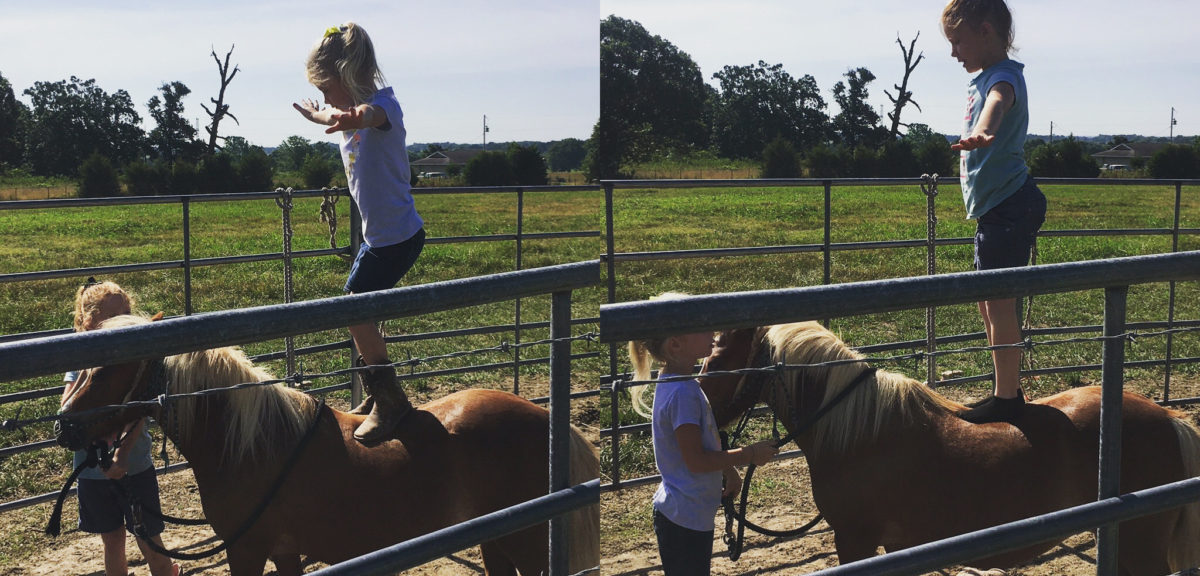
The girls practicing their “tricks”!

One of my sister’s brother’s-in-law responded to a medical emergency involving complications due to Covid-19. We’re grateful for his service. The hard thing is the subsequent exposure to him by my sister’s family and then my whole family to my sister’s family led us to feeling the need to quarantine ourselves from my family for two weeks. It felt like we had just started being able to see people and since 80% of the people the girls and I spend time with outside of ourselves are my family it was a major shut down for us. Being isolated has shown me a few things.

First, it highlights the holes and weaknesses of my relationship with God. In Him we are never alone. But, I have become dependent on people to be my sounding board and comfort to get through hard things. When that support system is physically removed, I am actually in a better place to create real change in my situation. But it feels the opposite! It feels like I am alone and my problems are bigger and I get stuck in my head a LOT more often. And in my head things a HUGE mess right now! I am learning to rely on God and use Him as my sounding board. That’s a much better thing anyway. Since in talking with Him I’m not gossiping. Since He alone can do something about most of the things I am concerned about and struggling with. And since He is perfect and, though I may hurt His feelings, He forgives more easily than people can. I know all these TRUTHS! I am grateful for the scripture I’ve been taught and have read and memorized and taught and helped the girls memorize. I just have to practice rehearsing the truth over and over in my mind instead of my problems. I am working on it, but it remains a struggle and truly a work in process.

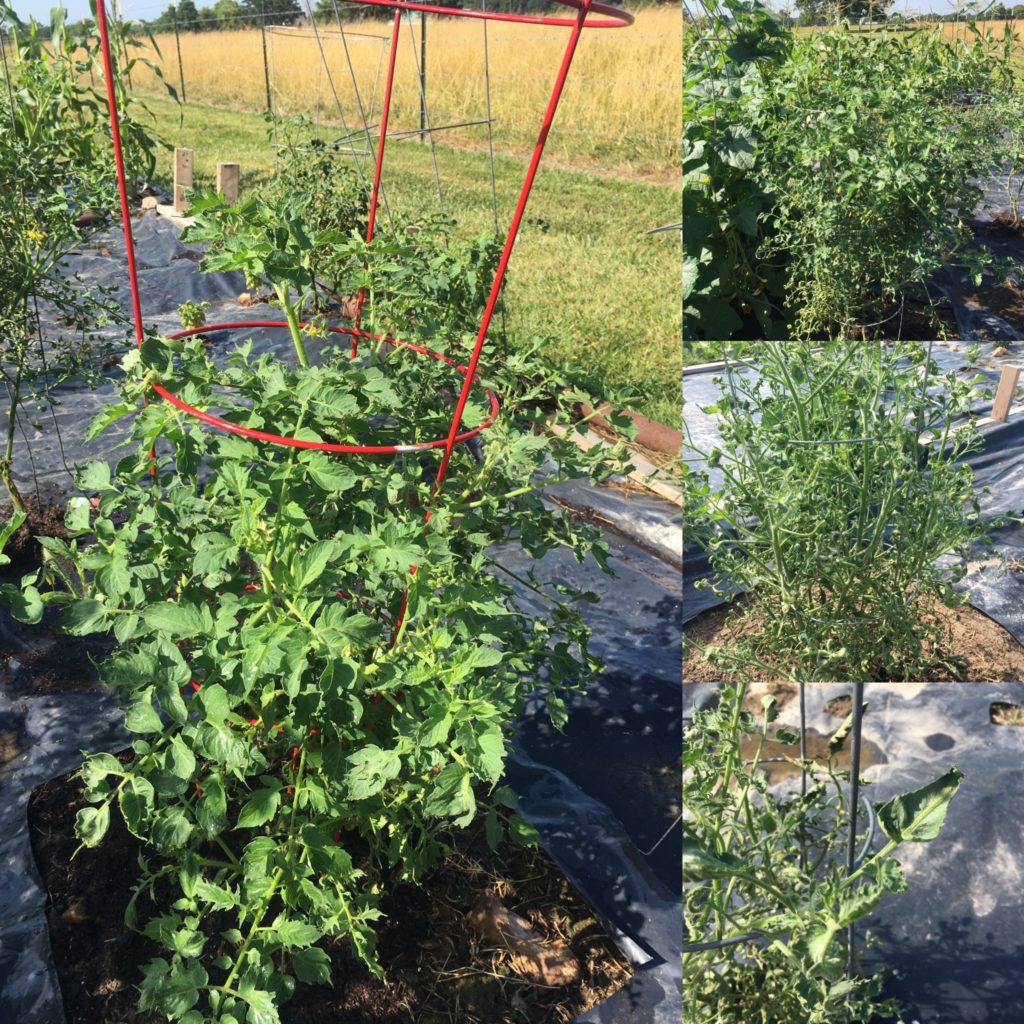
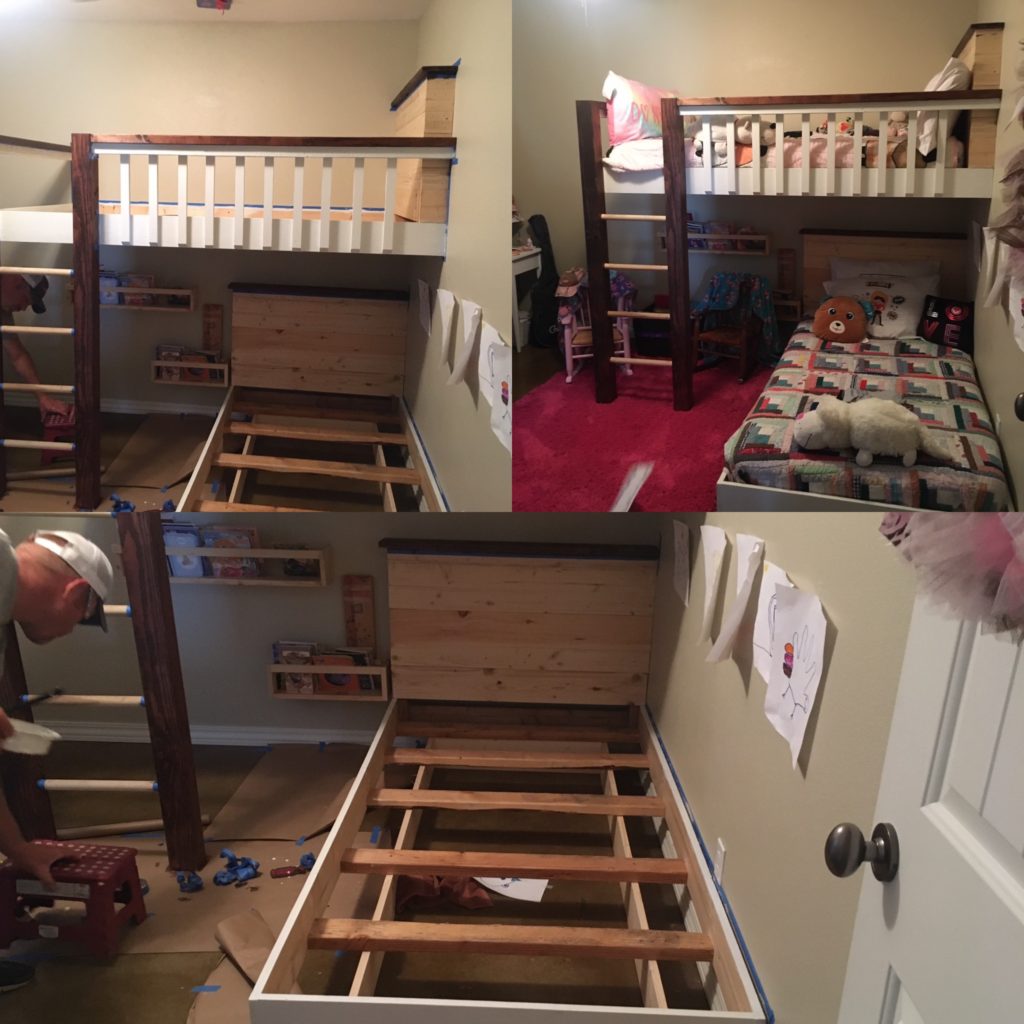
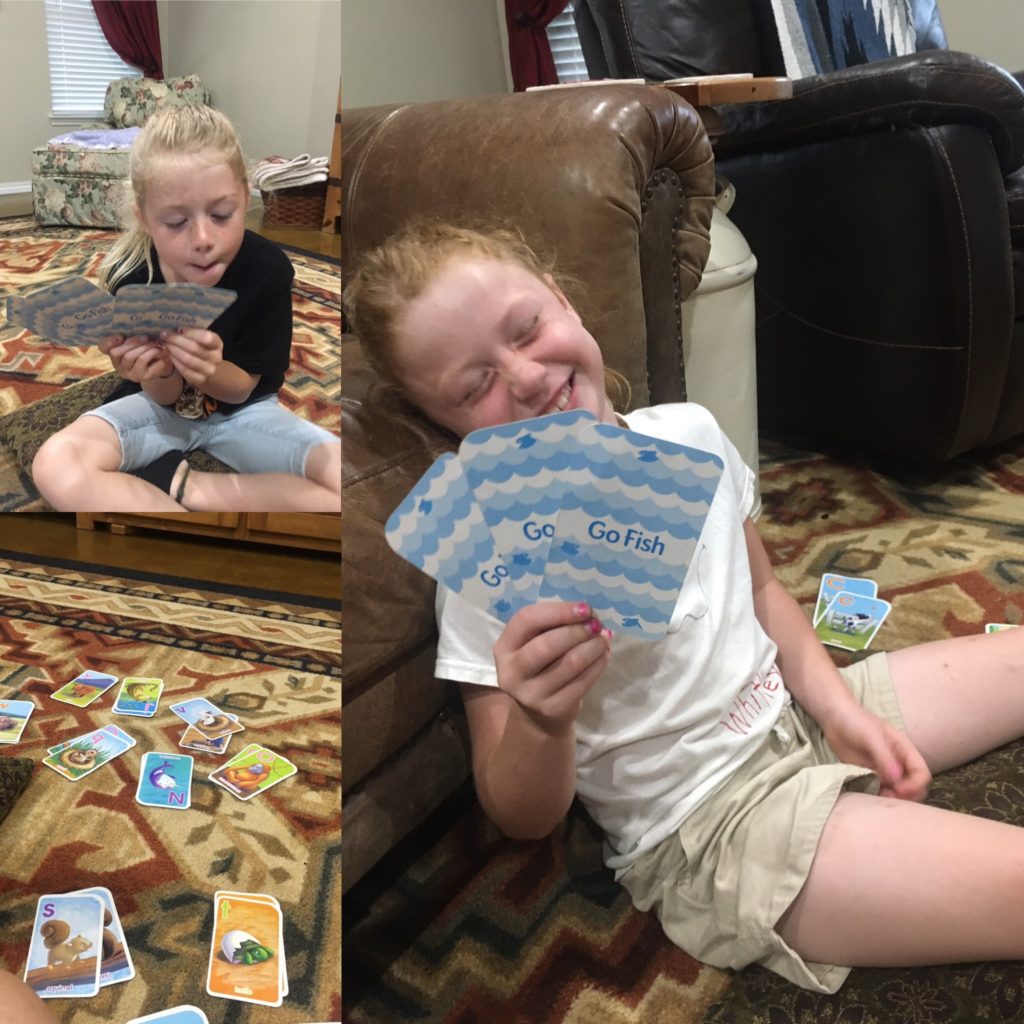
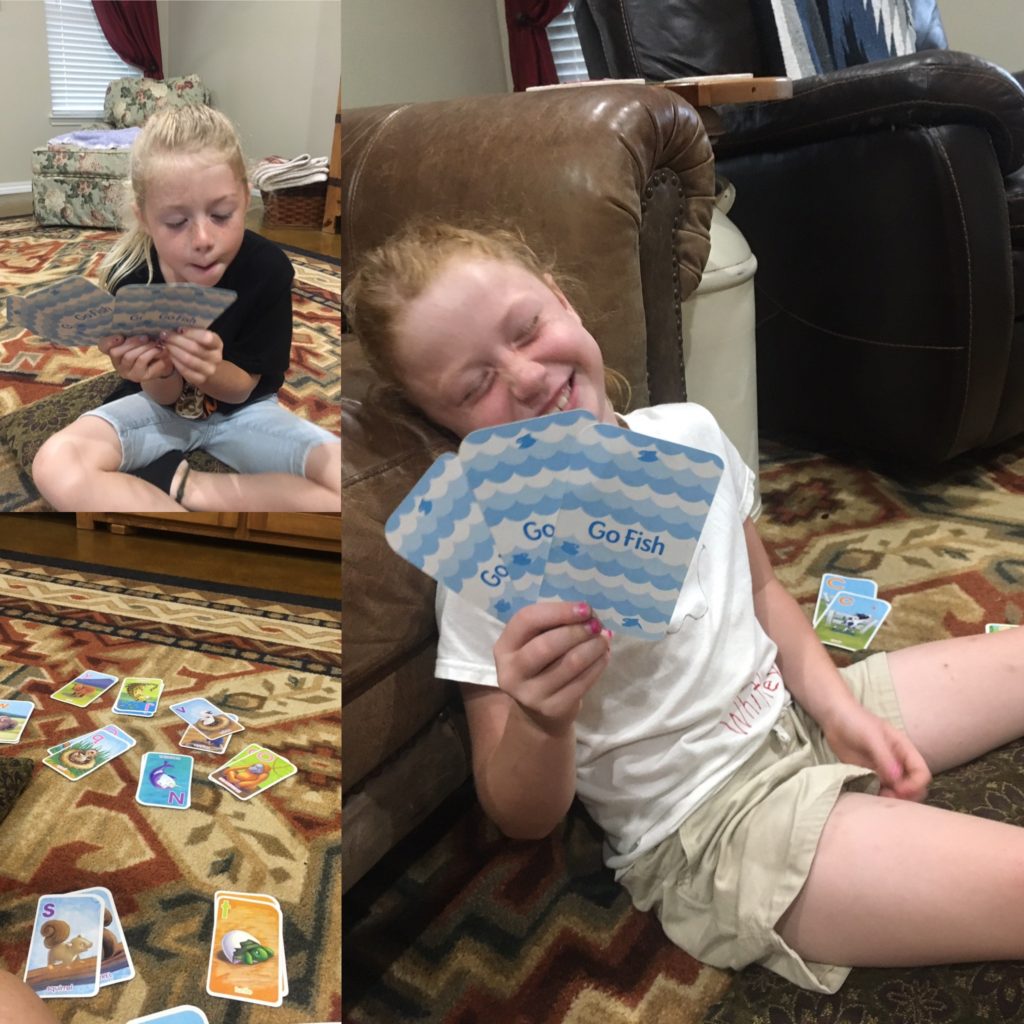
I have also learned it is the little things that matter. It is taking the time to visit with my daughters. It is playing Go Fish and laughing at nothing. It is watching their flips and tricks and taking pictures and making videos to send to cousins they can’t see because of Covid and great grandmas they can’t see due to distance. It is being creative about birthday celebrations and vacations because of the virus and closed businesses. It’s a chance to expand our circle of people and strength other friendships. It’s finally painting the bunk beds their daddy and uncle built them for Christmas. It is about celebrating a replacement car even if it isn’t the one I wanted. It is celebrating healthier tomato plants even if I don’t know if we’ll get more than our one tomato. You see this road is rocky and these circumstances are fibrous (no pun intended), but it is what I ruminate on (to borrow an illustration from the way cows eat) that feed my soul. A cow has 7 stomachs and their food has to go through a lot of digestion to give the cows the nutrients they need. The nutrients are in the grass, but the cows have to really let that grass sit and they have to chew it and ruminate it to get to those nutrients. I can ruminate on the hard things and poison my soul with all the hard there is today. Or I can ruminate on all the blessings and nourish my soul with all the good there is today. This is a choice that is honestly so hard to make right now it barely feels like a choice. I honestly want to wallow in self-pity and cry and throw a big old hissy fit. But, I won’t feel better when that’s done because it won’t change anything. So, I am choosing instead to feed myself truths even when they seem patronizing and useless because the truth will set me free. By focusing on it, I will eventually be freed from this grouchy, negative place of hard and revel in the beauty that surrounds me. At least that’s the truth I read in the Bible and it’s what I’m clinging to in this long season of helplessness to change my situation.

This past week, and the one ahead, where I can’t see my family have been and will be hard. They will all be together tomorrow for the 4th of July. All except us! Just like it was all except us at Easter. And I’ll probably cry about it. But, I do have these three amazing human beings I do get to see, and a chance to see my Nanna outside during some fireworks tomorrow night. And that is the good I am striving to focus on. The sunshine on my cloudy day!

I fear what the school year holds for my daughters and for me. But again that is something I cannot control. I have talked to some other teachers about some of the possibilities, I have checked my email every day hoping for any inkling of what is coming. But none of that really helps me feel better. Today my intention will be to pray or speak a truth whenever I start to worry or pity myself. I will remind myself that God is the only one REALLY in charge of school this fall. I will be grateful for the fact that several of our board members and our superintendent know that and rely Him for their direction. I will mess up today and grumble and worry, but if I set and reset my intention to focus on and ruminate on truth then I will have a more positive outlook and will see more of the sun in my partly cloudy skies instead of just the clouds.

That is where I am today in my isolation from people and my invitation to the throne room of grace. Where are you today? What things can I pray with you about?

EducationRamblingsResourcesScience of Reading

Syllable Types, Part 2

In Syllable Types, Part 1, we talked about the 6 syllable types you will find in just about any article you look up, product you look for or purchase and in any phonics program you try. Today we are going to talk about 2 more types that are not always included. Even though they are not always included they are valuable to know about. These syllable types help with understanding the pronunciation of words and some more seeming rule exceptions that actually have an explanation or another rule they are following. These two types of syllables are Diphthong Syllables and Schwa Syllables.

It was interesting to me in thinking about this post last night and as I am writing it today to realize that although, I have always been taught about these syllable types in conjunction with learning how to syllabicate (diagram syllables) multisyllabic (2 or more syllables) words. However, 6 of the 8 types will be encountered by readers in single syllable words. All the syllable types except Consonant le and Schwa Syllables can be found in single syllable words. Cat is a Closed Syllable, he is an Open Syllable, white is a Silent e Syllable, meet is a Vowel Team Syllable, mark is an R Controlled Syllable, and boil is a Diphthong Syllable.

The Consonant le syllables are sometimes called Final Stable Syllables because they come at the end of words (final) and they are their own syllable (stable syllable). Since the C-le Syllable contains it’s own vowel sound, it is it’s own syllable, but none of them form complete words. Therefore they cannot be found in single syllable words. Schwa’s are dependent for position on accented syllables within a word. Therefore, to my knowledge no single syllable words would be Schwa Syllables. However, I do know that we as American’s get lazy with our pronunciation of vowel sounds within words at times and therefore may have created some schwa single syllable words based purely on dialect instead of English rules.

Okay let’s get to the subjects of the day, Diphthong and Schwa Syllables. I will discuss both of these individually. We will talk about what they are, why they are not always included in Syllable Type lists and how they effect readers’ decoding and pronunciation skills and abilities. First up, Diphthong Syllables.

  1. Diphthong Syllables

Diphthong Syllables are not always included in syllable lists and programs because not all programs, teachers, people, differentiate between diphthongs and vowel teams. Remember, a vowel team is technically a team of two vowels that follow the rule “when two vowels go walking, the first one does the talking’ and says it’s name’. Vowel teams therefore would only include ie, oe, ai, ee, ea, and most programs would include ay here. I don’t love that inclusion because y is not a vowel. I would personally be more likely to include ue because both letters are vowels and follow the rule for the u saying it long vowel sound and the e being silent. I am honestly not sure why programs do not include ue, unless it is because it is not common. Another possible reason may be because according to some articles I have read, the e is in words like true, is not a part of a vowel team, but an obscure use of silent e because English words don’t end in u.

Merriam Webster defines a diphthong as “linguistics a gliding (see GLIDE entry 1 sense 4monosyllabic speech sound (such as the vowel combination at the end of toy) that starts at or near the articulatory position for one vowel and moves to or toward the position of another”. So, a diphthong has a sound that includes two sounds blended or glided over together, but not really a blend of the two sounds the letters would make individually as in blends like bl, tr, fl, etc. Also, there are still two different sounds instead of two letters coming together to make one new sound like digraphs sh, ch, ph, th, wh. Here are the most common diphthongs I think of; oi as in oil, oy as in boy, au as in sauce, aw as in saw, ou in sound, and ow in low or cow.

One thing to keep in mind about the diphthongs oi and oy are that they make the same sound. Another thing is that oi is generally at the beginning of or in the middle of words like oil and soil. Lastly, oy is generally at the end of words like boy or enjoy (en-closed syllable, joy-diphthong syllable).

With au and aw they again make the same sound like oi and oy. This time it is au that is typically found at the beginning of or in the middle of words like audit (aud-diphthong syllable, it-closed syllable) and sauce. And aw comes generally at the end of words like saw and slaw.

Ou and ow are the same as au and aw in respect to having the same sound and the second letter determines their placement in words. Ou is found in the middle of words like found and at the beginning of words like out. Ow is found at the end of words like cow and endow (en-closed syllable, dow-diphthong syllable). The unique thing about ow is that is has two sounds. It makes it’s traditional matching sound to ou in bow (bending at the waist as a sign of respect, pride or gratitude), but also a long o sound in snow and bow. So, this is one spelling that it is important to teach children both sounds for from the beginning. That way when they come to the word b-o-w, they can use both pronunciations and context from the text to determine the correct sound to use.

The most important thing to do in regards to diphthongs and growing readers is to teach them the sound or sounds for these letter combinations so that they will start to recognize then as a sound unit instead of two separate letter sounds. One activity you can use to help your reader start to recognize these letter combinations as a single unit is after a lesson on them have them find all of that combination on a page of a book they are reading or a printed passage or in a magazine or newspaper. You can just have them find as many as they can for 1 minute, so it doesn’t become a huge laborious task. And, if you are using an authentic text (one you are reading anyway or a magazine or newspaper) instead of a decodable text (one devoted to specific letter or letter combination sounds) they may not find any. That is okay, just looking for them will help them make the connection to look for and see these letters as one letter sound unit.

The importance of knowing that diphthong’s form a syllable is that it reiterates to readers that every sounded vowel is a syllable. Syllabicating words with diphthongs in them helps readers become more fluent in recognizing these letter pairs (all of them have two letters as the root di- at the beginning of the word shows. Di- means two.) Fluently recognizing these letter combinations and being fluent in knowing their sound or sounds will greatly aid you growing reader as they encounter longer and more complex words in their reading journey.

2. Schwa Syllables

Schwa Syllables are syllables when the single vowel in the syllable makes a distorted sound. The sound it makes is the short u sound of /uh/. This can happen with any vowel. To be completely honest schwa’s are very complicated to explain thoroughly for me. That is because the placement of a schwa sound has to do with accented and unaccented syllables. I think that it is very valuable to teach young children about accented and unaccented syllables. I think it is less helpful to try to teach older, struggling readers. The reason behind this is that young children can learn new things easily, in most cases, and can therefore, most likely, be taught to hear the accent in words fairly easily. However, for older people like myself or my middle school students who have not been exposed to accented syllables and have not been trained from an early age to hear the accent, it can be VERY difficult to learn.

Different ways to syllabicate the word banana.

The most critical thing to teach students about the schwa syllables and schwa in general is again the sound it makes. That way growing readers have another option for when they are decoding (sounding out) unknown words and the actual vowel sound as dictated by the syllable type (open or closed) doesn’t work. For instance in the word banana, you can syllabicate it a few different ways, ban-an-a, ba-na-na, ba-nan-a. According to open and syllable types and the vowel sounds each uses (closed syllables have 1 or more consonants after the vowel and use short vowel sounds, open syllables end in a vowel and use long vowel sounds), the pronunciation of the word changes based on which syllabication you use. The first option, ban-closed, an-closed and a-open would be pronounced ban-an-ay, not how we say the word. The second option, ba-open, na-open, and na-open would be pronounced bay-nay-nay, still not how we say the word. The last option, ba-open, nan-closed, and a-open would be pronounced bay-nan-ay, our last option (and the correct one), but still not how we say the word. Insert schwa syllables and we can finally get to the correct pronunciation. Because the middle syllable is accented (said with more force) it is pronounced correctly as a closed syllable with a true short a sound. However, the unaccented first and last syllables both use the schwa sound of /uh/ for the a. Therefore, we finally get our pronunciation of the word as buh-nan-uh. And the syllables are ba-schwa syllable, nan-closed syllable, a-schwa syllable.

To review, our last two syllable types are diphthongs and schwas. These are most important in helping readers have additional sounds for decoding (sounding out) words. Both of these syllable types are important and I believe that they should be included when teaching syllable types. How deep you go beyond the sounds of the diphthongs and the schwa depends on the needs of your readers and the complexity of the texts they have progressed to.

If you have taught these syllable types to your child or class, how did it go? If you found this information helpful please like this post! Please share your thoughts and experiences below so that we can continue to learn together!

RamblingsResources

5 Things to Listen for When Your Child Reads

The girls working on their AMI assignments!

I have been working with both girls on their reading and with my sister and niece on helping her become a proficient reader as well. In thinking about this journey with these precious girls, I have thought of 5 different things that parents or teachers should listen for when they listen to their readers. I know that it is vital to correct readers as they read so that they do not develop compensation strategies or learn bad or incorrect reading habits. However, if you don’t know what you are listening for or what to do when you do hear your child make mistakes then it can feel like a useless and frustrating experience. So, I have put together a few things to listen for and some possible causes and correcting strategies for those specific mistakes.

  1. Mispronunciation of letter sounds

If your child is reading and they read an unknown word with one mispronounced sound, like reading last instead of the list, pat instead of put or sit instead of lit, then the first step would be to ask then to sound out the word. If they sounded it out to begin with, but read one of the sounds incorrectly, ask them to sound it out again. If the wrong sound is used again, ask the reader to spell the word. Then have them sound it out again. If they are still using the incorrect sound, ask them the sound of the letter they are miscueing on. If they give the correct sound have them sound out the word again. Repeat this until they use the correct sound with each letter. If they give you the wrong sound for the miscued letter, give them the correct sound and have them repeat the sound to you a few times. Then have them sound out the word again. Once they have sounded out the word correctly continue on.

If this is an extremely frustrating process for your child you might just note the miscued word and letter. Then work on it at a better time when they are fresh and are less likely to reach frustration level. Also, always note the letters that your reader miscues on, especially if it is the same letter/letters repeatedly. Then at a separate time work on the sound of that letter to increase automaticity of the sound. Often when a reader is making this kind of miscue they may know the sound the letter makes (they have accurate knowledge of the sound), but they do not have instant recall of it (they do not have automatic knowledge of the sound).

2. Word Calling

My oldest tends to start doing this when she gets tired of reading. My youngest does it when she’s reading at the upper level of her independent reading band or she is intimidated by what she is reading or her audience. Word calling is when a reader looks at the first or first couple of letters and then just calls a word from their oral vocabulary that matches that letter or beginning like saying instance for ice, or yellow for yelling, or accentuate for accident. That last one may seem unlikely for you, but I have certainly heard something similar from my oldest. She has a large oral vocabulary that far exceeds to her sight word vocabulary. If you are not sure what sight word vocabulary is, I explain it more in my post on Orthographic Mapping. So, once she’s tired of reading and sounding out words she will just sound out the first couple letters and then pull a word form her oral vocabulary and use it instead of whatever is actually written on the page. The most remarkable thing is that even with doing this and often making the mistake talked about in number 5 she manages to gain the gist of the story and typically have remarkable comprehension!

One strategy that I have seen for this is from the book Equipped for Reading Success by David Kilpatrick. He talks in it about compensation strategies struggling readers will use and he suggests sometimes having students work out words from the middle out or from the end forward. That means choosing one of the syllables from the end or middle and covering the rest of the word up and then work from that point to the rest of the word. So, if your readers was word calling the word invisible, you could have them read the consonant le syllable at the end by covering up everything but ble, then add in visi for visible and then add in the prefix to read the whole word invisible.

Another thing I work on with my girls is just telling them to reread and to always be sure to read all the way through the word. I generally use this when it is a shorter word they are word calling with, like saying bath for bird. Another thing to consider if this is happening a lot with your reader is that possibly they are feeling really taxed with the level or amount of reading they are doing in each sitting. So, you can either give them shorter passages to read or easier books for a time in order to increase their sight vocabulary before moving back to the longer or higher level passages or books. You can also just limit the amount they are reading from the same level of text, a chapter instead of the whole book, or a page instead of a chapter or trade off one sentence that you read and one sentence that they read.

3. Sounding out known words

I find that this happens sometimes when a reader gets nervous about a change in their audience or overwhelmed with the text they are reading. Sometimes, I think it also just happens by habit. If a reader has been reading a passage or book, especially if it a decodable text, and they have kept automatically reading a word that is in their sight vocabulary and then all of a sudden they try to sound it out instead, there are usually a few reasons I have noticed. One is that they are paying more attention to who is listening and worrying about their reaction than they are paying to the text or story. Another reason is that they are used to being prompted to sound words out and they revert to that habit. A third and similar reason is that the sentences or page that the student in on has several other words that the reader does have to decode (sound out) and so again they revert to that habit even on a word that they don’t have to use decoding to read.

I find it most helpful to just prompt them to read the whole word at once. Or, if it is a word that has been repeated throughout the text and they have been reading it automatically from their sight vocabulary, I show them one printing of it that they read automatically and the one they just sounded out and show then that they are the same word. I will often interrupt their sounding out to show them the match, so that they do not fully revert to sounding out that word.

4. Using the wrong vowel sounds

Sometimes when a learner is reading they will use a long vowel sound when they should use a short sound or visa versa. This is generally a similar issue to using the wrong sound for one of the letters when sounding out words. You may notice this as a new problem for a reader who has never done it before after introducing long vowel sound words like Open Syllables or Silent e Syllables. Then the learner may over apply those rules and start reading CVC words they never had trouble with before with long vowels, like reading cat as cate or pick as pike. This is again a problem with having accurate knowledge of a vowel rule, but not automatic knowledge. This can best be addressed with additional practice with a blending board and going back and forth between open and closed syllables like he and hen and practice with words like can and then adding a Silent e and making the word cane. As the reader gets more practice with activities like this their knowledge grows from accurate to automatic.

5. Reading the wrong word with the correct letters

This is the hardest one for me to give suggestions on. First, let me tell you what I mean by it. This is when a reader reads left for felt. So, they have seen all the letters and are using the correct sounds for them, but they have reordered them in their brain and called the wrong word. The best hope here would be that the reader would be paying enough attention to the story or passage that they would recognize their error when the sentence no longer makes sense. Sadly, that is not always the case.

The first thing I would try when this happens is to simply stop the reader and tell them to reread the sentence that the incorrect word was in. If the reader doesn’t correct their mistake then I would ask them to tell me the meaning of the sentence and reread again. I would do this to see if that causes them to correct their misread. If it still doesn’t correct their mistake then I would have them sound out that specific word. At times I have had readers who struggle a lot with this difficulty, sound the word out correctly and still say the misread word. So, the child reading left incorrectly as felt would correctly sound out /l/ /e/ /f/ /t/ and then when blending together into the word would still say felt. I would ask them to try again a couple of times. If it still doesn’t work, I will sound out the word orally to the student and see if that causes them to hear left instead of felt. If that still doesn’t work, I will ask them to say the sounds and ask them if that makes the word felt or left. Often by this point, especially if they are listening and not looking at the word they will call the correct word. The last thing I try to do for this is to have the child tell me the word again and then spell it for me to help move them to completing their orthographic mapping of that word.

Now you have a few specific things to listen for when listening to your growing readers. And some strategies that will help you help them outgrow some of these limiting habits. Also, here are a few of my biggest take aways from working with readers:

  1. Some accurate reading is better than a lot of inaccurate reading
  2. Never be afraid to let readers read easier text on occasion to build confidence and alleviate compensating habits
  3. Be sure to encourage and compliment as often as you corret
  4. Use as many authentic reading opportunities as possible for practice, (reading to younger students, reading directions, reading a recipe, etc.)

Let me know if you have encountered any of these struggles with your readers. If you try any of these tips to help them overcome these troublesome habits, please share how it goes.